Leave a Message

Thank you for your message. We will be in touch with you shortly.

Median home sale prices ticked up ...

Median home sale prices ticked up ...

The Big Story
Quick Take:
  • Median home sale prices ticked up slightly on both a month-over-month and year-over-year basis in February, continuing the holding pattern we've seen in recent months.
  • Inventory levels continue to climb modestly on a year-over-year basis, with new listings surging heading into the spring selling season.
  • Existing home sales rebounded slightly from January, but remain below where they were at this time last year.
Note: You can find the charts & graphs for the Big Story at the end of the following section.
*National Association of REALTORS® data is released two months behind, so we estimate the most recent month's data when possible and appropriate.
 
Falling rates continue to ease the affordability crunch
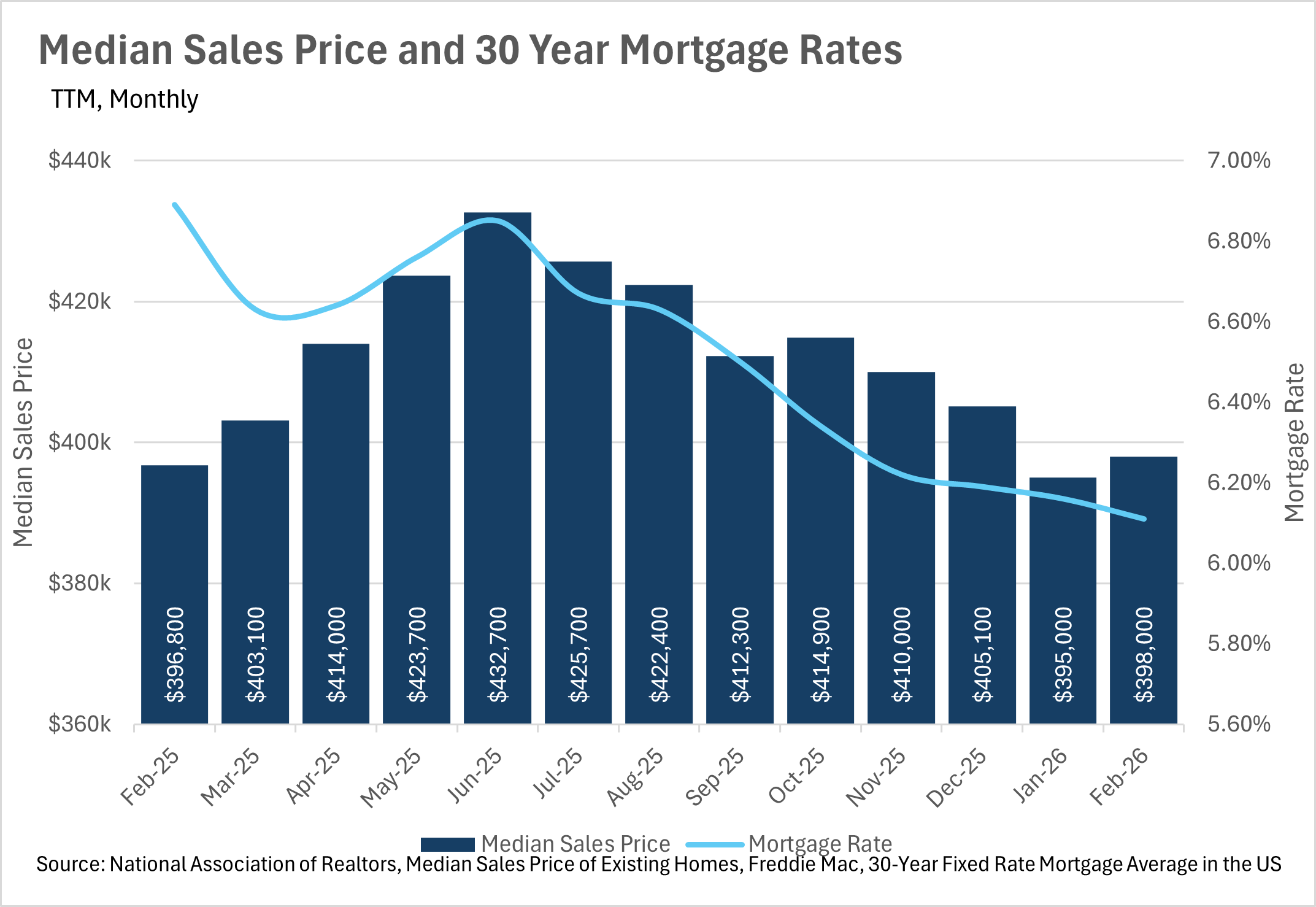
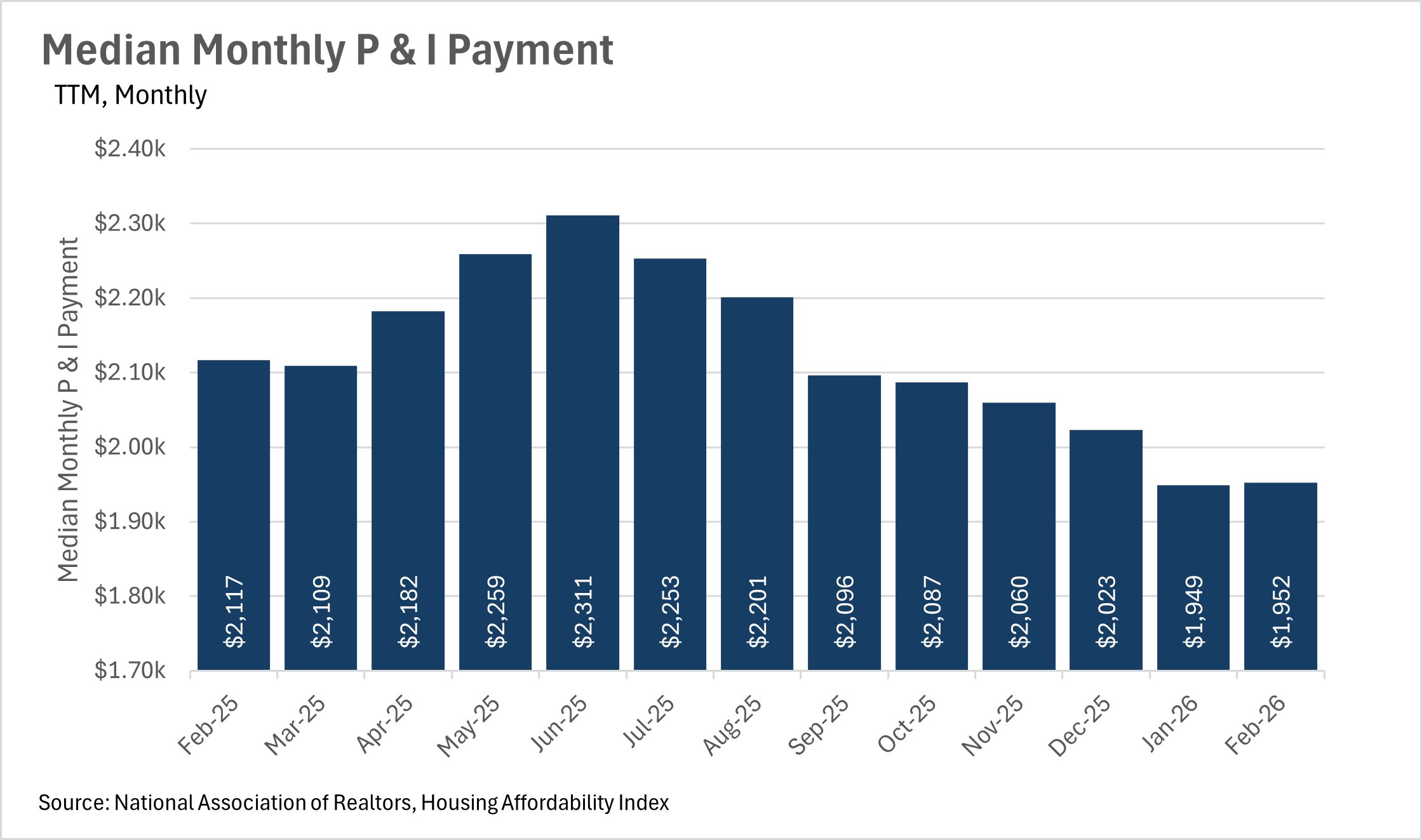
Although median home sale prices have remained remarkably stable over the past several months, the continued decline in mortgage rates is making homeownership considerably more affordable than it was just a year ago. In February, the median home sold for $398,000, representing a modest 0.30% year-over-year increase and a 0.76% uptick from January. On the mortgage rate front, the average 30-year rate dropped to 6.11% in February, representing an 11.32% year-over-year decline from the 6.89% we were seeing at this time last year. This decline in rates has had a major impact on what the average homeowner is paying each month. The median monthly P&I payment came in at $1,952 in February, down 7.79% from the $2,117 the median homeowner was paying just a year ago. That's approximately $165 in monthly savings, which is a significant boost to the average American's budget. If rates continue to trend downward, we could see buyers start to return to the market in a meaningful way as we move deeper into the spring and summer months.
New listings are surging as we head into the spring
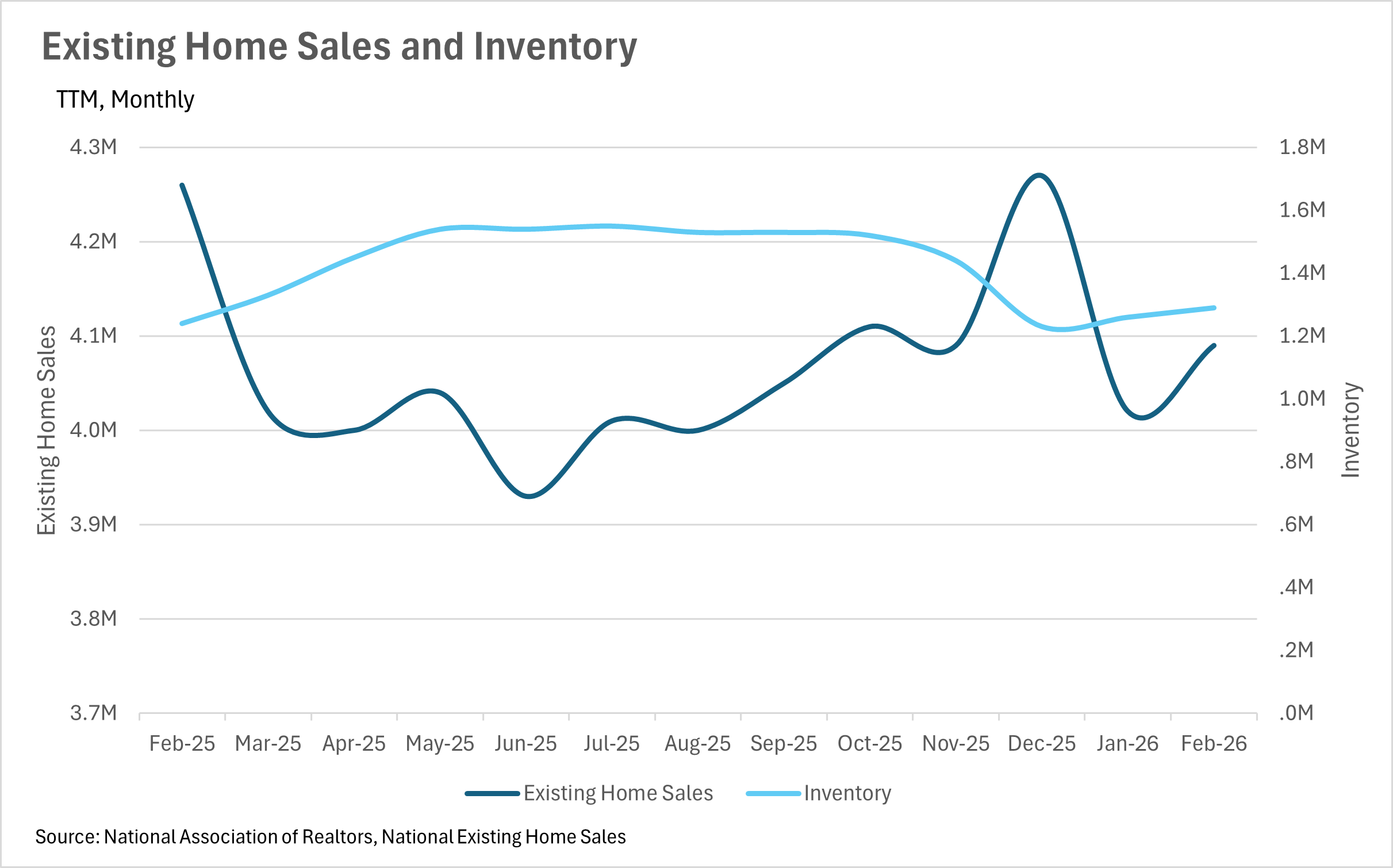
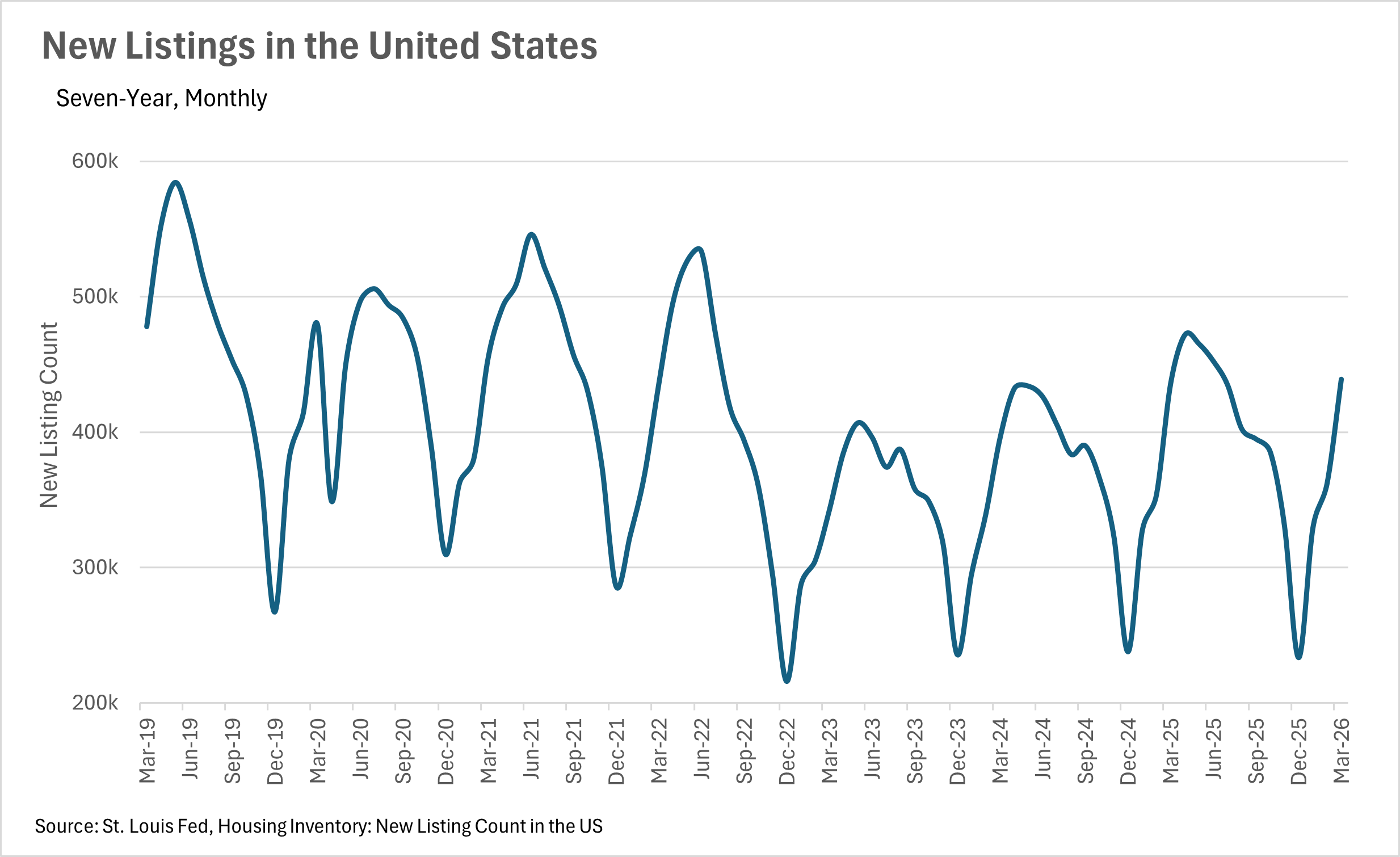
One of the most encouraging stories in the housing market right now is the dramatic increase in new listings as we move into the spring selling season. In March, there were 439,000 new listings that hit the market, representing an eye-popping 21.21% month-over-month increase and a 0.70% year-over-year increase. This surge in new listings is a very welcome sight, as it means buyers will have considerably more options to choose from as the market heats up. On the inventory side, there were 1,290,000 homes available for sale in February, representing a 4.03% year-over-year increase and a 2.38% month-over-month increase. This gradual build in inventory, combined with the huge surge in new listings, should give buyers some breathing room as we head into the busier months of the year. That said, inventory levels still have a long way to go before they reach the levels we'd consider truly healthy, so it'll be worth keeping a close eye on whether this momentum carries through the spring.
Existing home sales are showing early signs of life
After a sluggish January, existing home sales rebounded slightly in February, with 4,090,000 homes changing hands. This represents a 1.74% month-over-month increase, but still comes in 3.99% below where we were this time last year. While it's certainly encouraging to see sales pick back up, the year-over-year decline tells us that buyers are still being cautious despite the substantial drop in mortgage rates that we've seen over the past year. Part of the story here may be that buyers are waiting to see even more rate cuts before they jump in, or they may be waiting for the influx of new listings to give them more options to choose from. Either way, it'll be fascinating to see whether the combination of lower rates, climbing inventory, and a fresh wave of new listings is enough to bring buyers off the sidelines in the coming months.
A market that's slowly tilting back toward balance
When determining whether a market is a buyers' market or a sellers' market, we look to the Months of Supply Inventory (MSI) metric. The state of California has historically averaged around three months of MSI, so any area with at or around three months of MSI is considered a balanced market. Any market that has lower than three months of MSI is considered a seller's market, whereas markets with more than three months of MSI are considered buyers' markets.
 
At the national level, we're seeing an interesting dynamic play out. Inventory is growing at a modest pace on a year-over-year basis, existing home sales are lagging slightly behind last year's figures, and new listings are surging into the market just as we head into the traditionally busy spring season. All of this suggests that the market is slowly tilting back toward a more balanced state, which would be welcome news for buyers who have been dealing with tight inventory for years. However, if mortgage rates continue to drop and buyers finally decide to come off the sidelines, we could just as easily see the market swing back in favor of sellers. As always, real estate is a highly localized asset, which is why you should check out what's going on in your local market below in the Local Lowdown!
Big Story Data
The Local Lowdown
Quick Take:
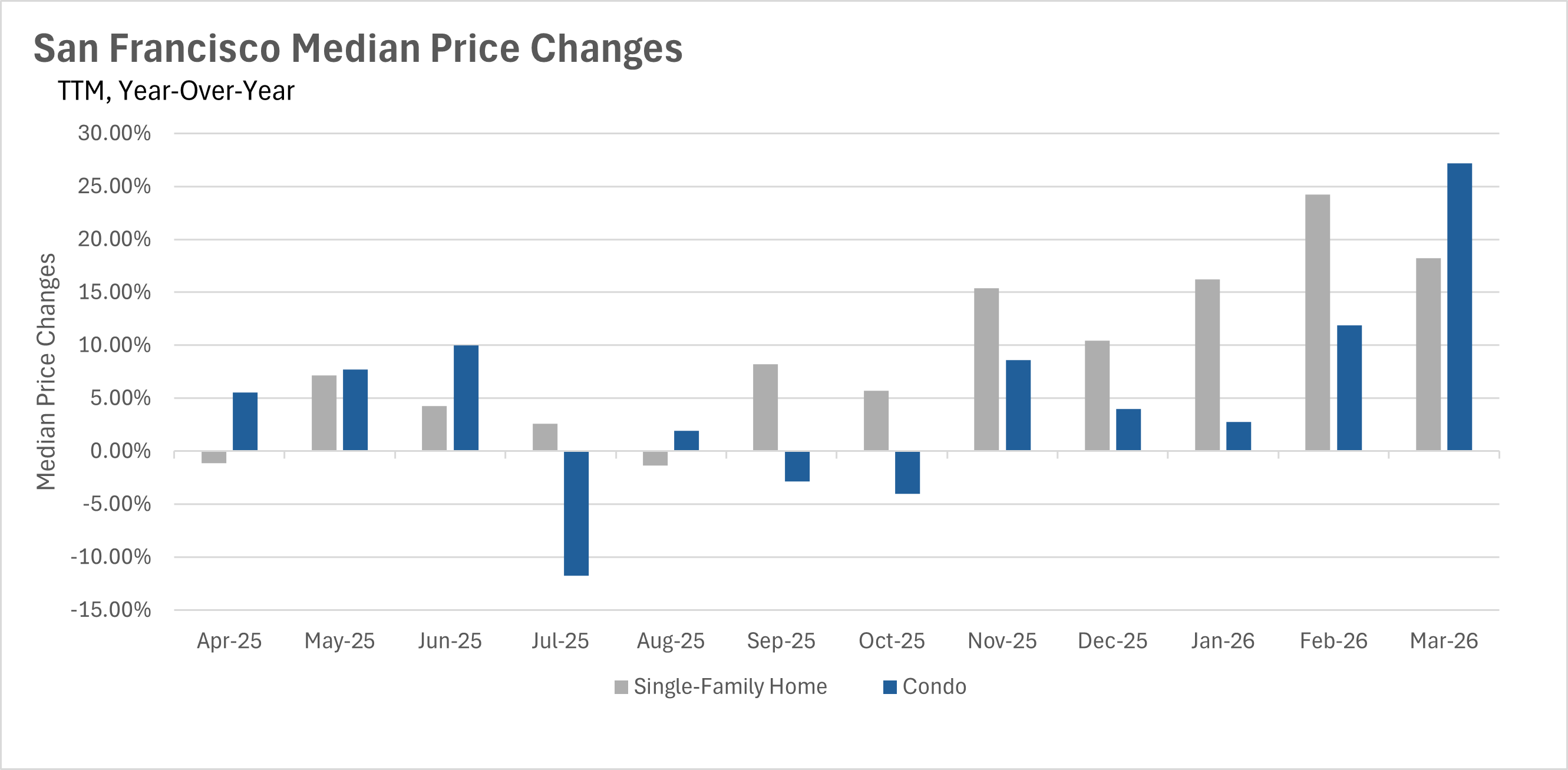
  • Median sale prices are soaring in San Francisco, with condos up more than 27% and single-family homes up more than 18% year-over-year.
  • Inventory levels remain more than a third below where they were last year, despite the typical spring uptick in new listings.
  • Listings are selling at a breakneck pace, with single-family homes moving in 12 days and condos in just 14 days.
 
Note: You can find the charts/graphs for the Local Lowdown at the end of this section.
San Francisco's spring market kicks off with record-breaking price growth
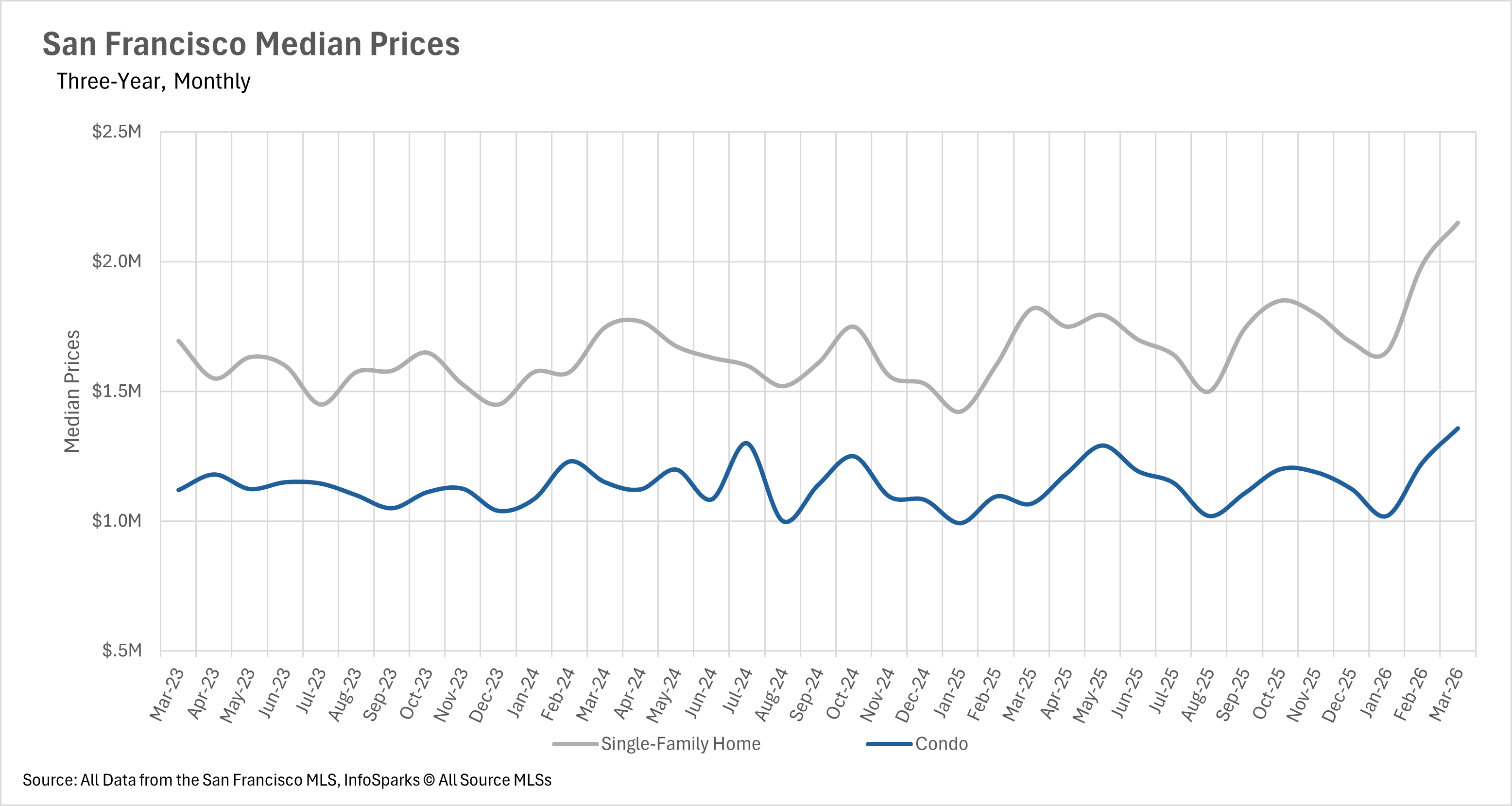
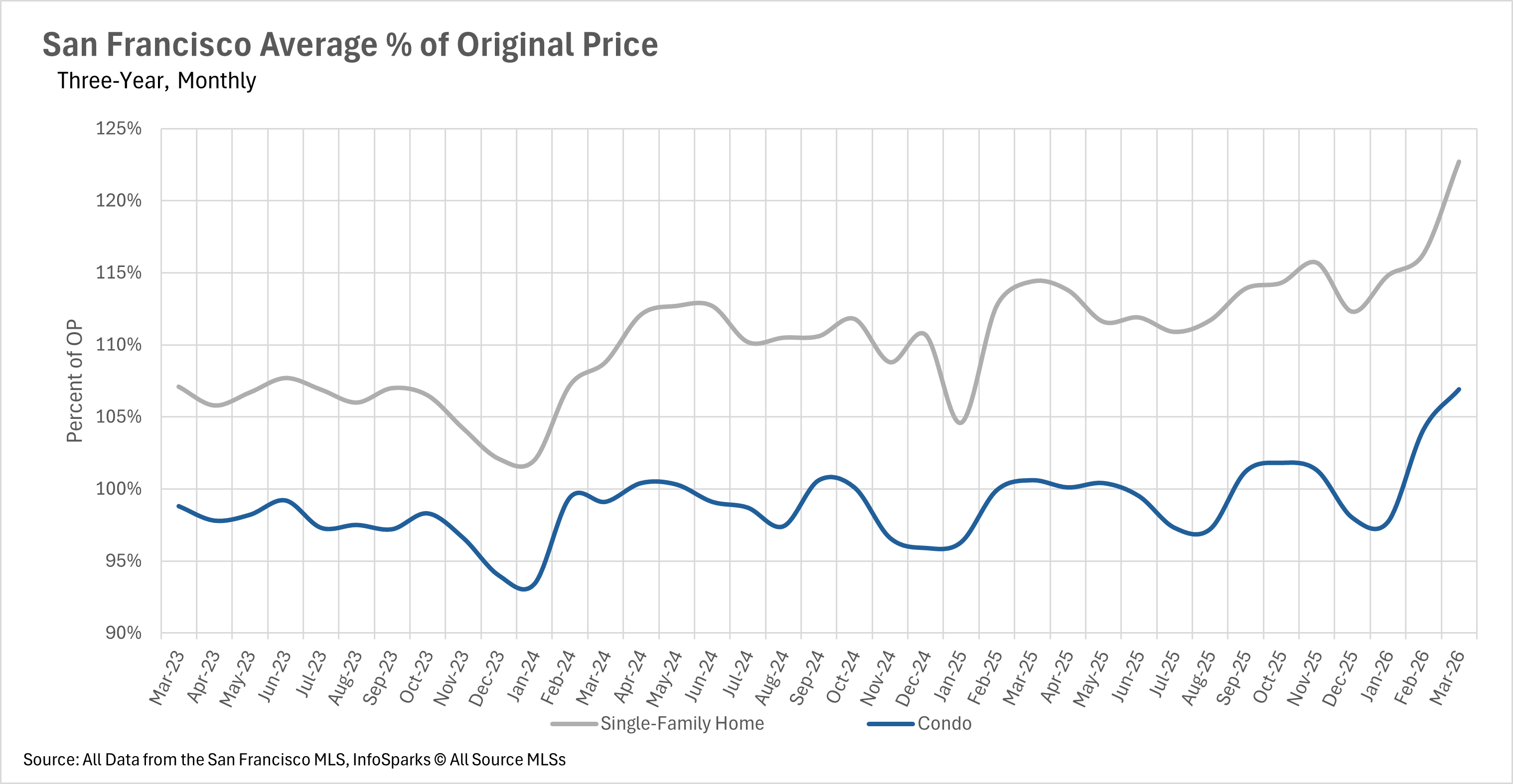
March brought explosive price appreciation to San Francisco, with both property types posting exceptional year-over-year gains. Single-family homes saw an 18.24% increase in median sale price, with the median home selling for $2,150,000. The condo market stole the spotlight this month, however, with a remarkable 27.17% surge in median sale price to $1,357,500. Competition for homes has reached an extraordinary level, with single-family homes selling for nearly 23% over the original asking price on average, and condos selling for nearly 7% over asking. These are some of the highest premiums we've seen in recent memory, reflecting the intense demand in San Francisco's housing market.
Inventory remains severely constrained as spring selling season heats up
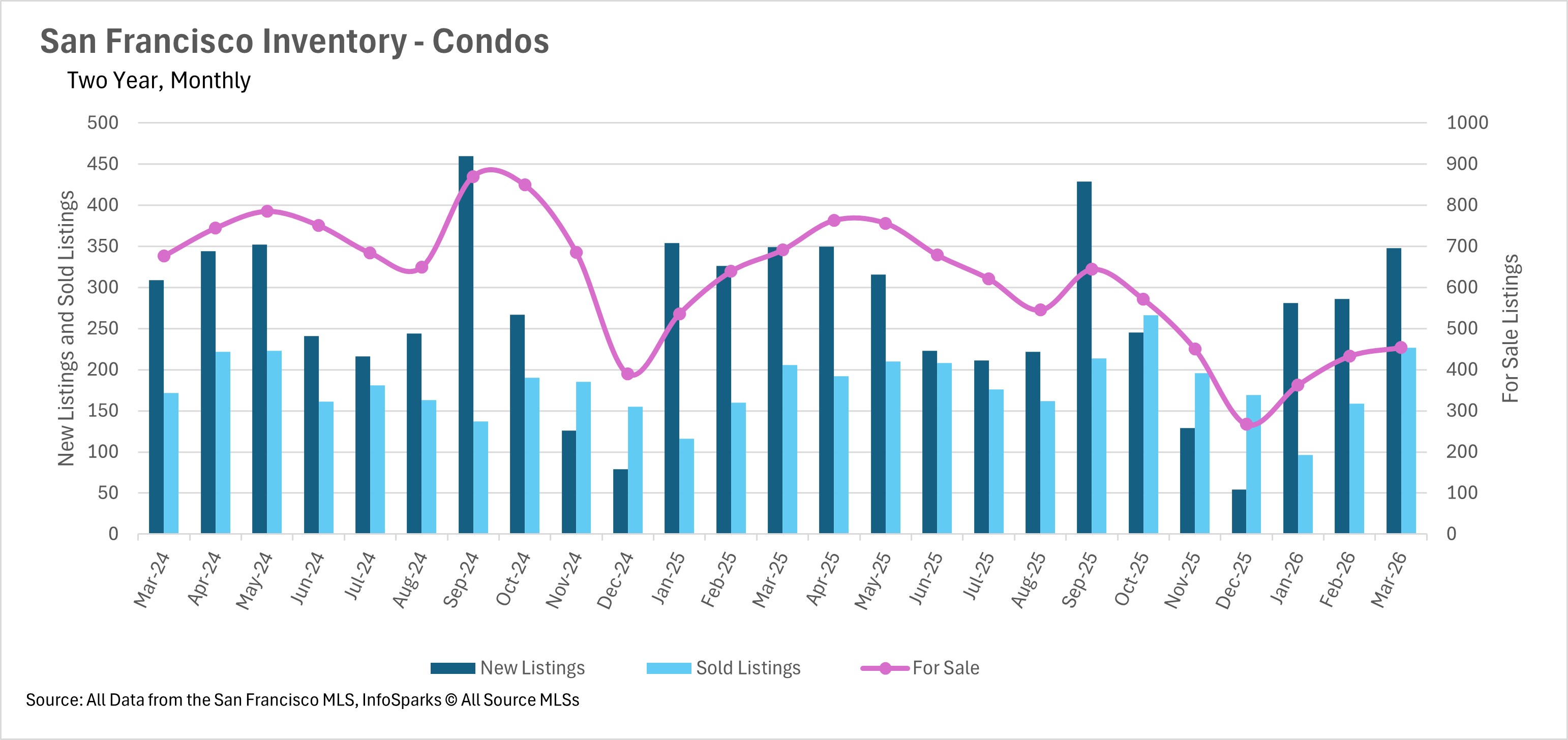
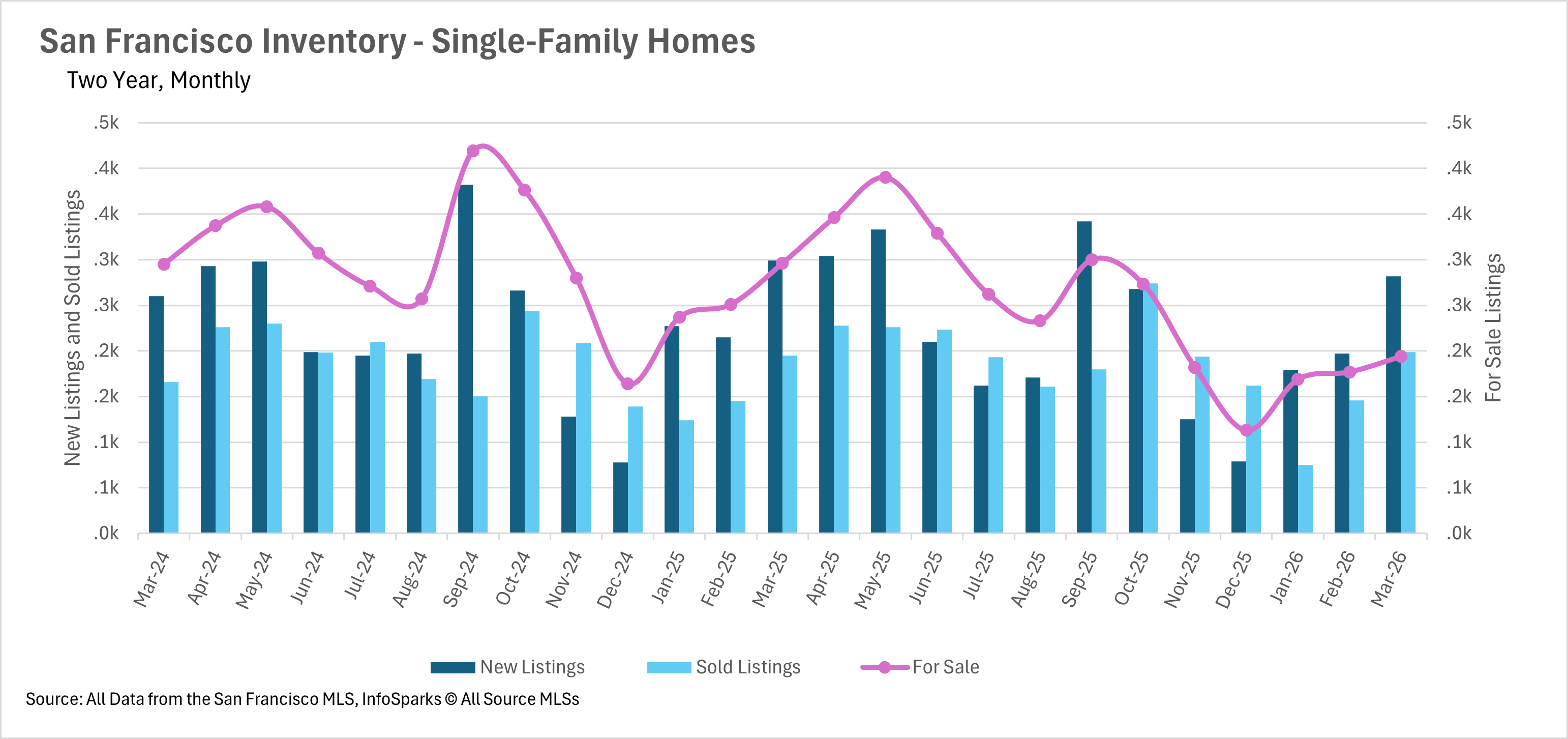
Despite the arrival of spring and the typical increase in new listings, inventory levels remain drastically below where they were a year ago. There are currently just 194 single-family homes for sale in San Francisco, representing a 34.46% decline compared to March 2025. The condo market is facing a similar shortage, with inventory down 34.30% year-over-year to 454 units. While new listings did increase from February, with 282 new single-family homes and 348 new condos hitting the market, the pace of sales has kept overall inventory suppressed. Buyers continue to face an extremely limited selection of properties as we head deeper into the spring season.
Homes are selling almost as quickly as they're listed
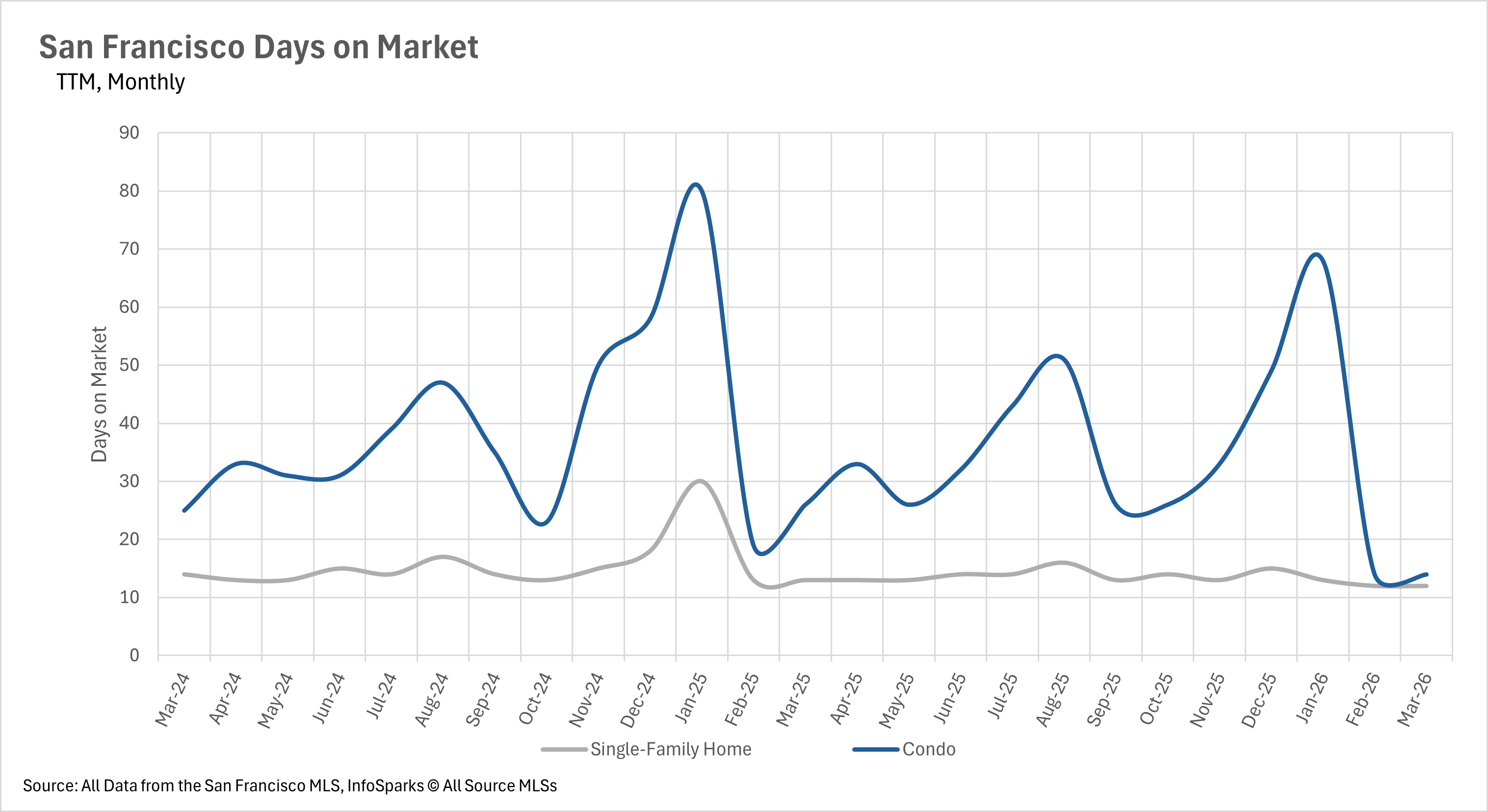
The severe inventory shortage has created one of the fastest-moving markets San Francisco has seen in years. The average single-family home is selling in just 12 days, representing a 7.69% decrease compared to last March. The condo market has seen an even more dramatic acceleration, with the average condo selling in just 14 days, a stunning 46.15% year-over-year decline. For buyers, this means there is virtually no time to deliberate before making an offer, and multiple-offer situations have become the norm rather than the exception.
San Francisco remains one of the tightest seller's markets in the state
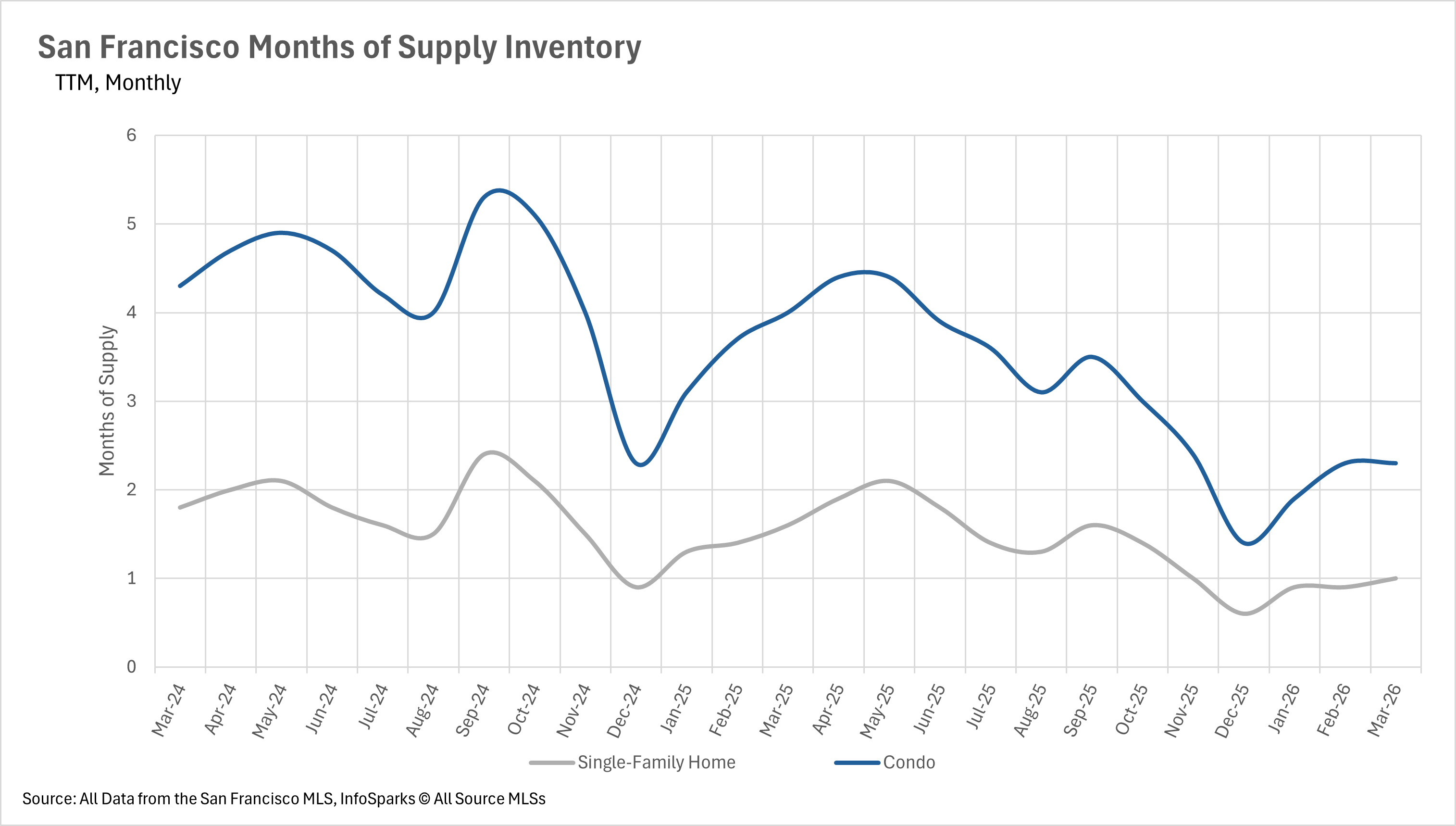
When determining whether a market is a buyers' market or a sellers' market, we look to the Months of Supply Inventory (MSI) metric. The state of California has historically averaged around three months of MSI, so any area with at or around three months of MSI is considered a balanced market. Any market that has lower than three months of MSI is considered a seller's market, whereas markets with more than three months of MSI are considered buyers' markets.
 
With just 1.0 months of single-family home inventory and 2.3 months of condo inventory on the market, San Francisco remains a deeply entrenched seller's market across all property types. Both figures are down more than 37% year-over-year, and the condo market has shifted from a buyers' market last year to a strong seller's market today. Sellers continue to enjoy significant leverage in negotiations, and buyers should be prepared for fierce competition throughout the spring season.
Local Lowdown Data
 

ActivePipe Message ID: 3757399

Let’s Talk

You’ve got questions and we can’t wait to answer them.