Leave a Message

Thank you for your message. We will be in touch with you shortly.

The spring selling season has delivered exactly the kind of price action that sellers were hoping for.

The spring selling season has delivered exactly the kind of price action that sellers were hoping for.
The Big Story
Quick Take:
  • Median home sale prices surged past last year's levels in May, as the spring selling season continues to build momentum.
  • Inventory levels have climbed back to where they were at this time last year, giving buyers more options heading into the summer.
  • Existing home sales posted their strongest year-over-year gain in quite some time, signaling that buyers are finally coming off the sidelines.
Note: You can find the charts & graphs for the Big Story at the end of the following section.
*National Association of REALTORS® data is released two months behind, so we estimate the most recent month's data when possible and appropriate.

The spring rally is in full swing
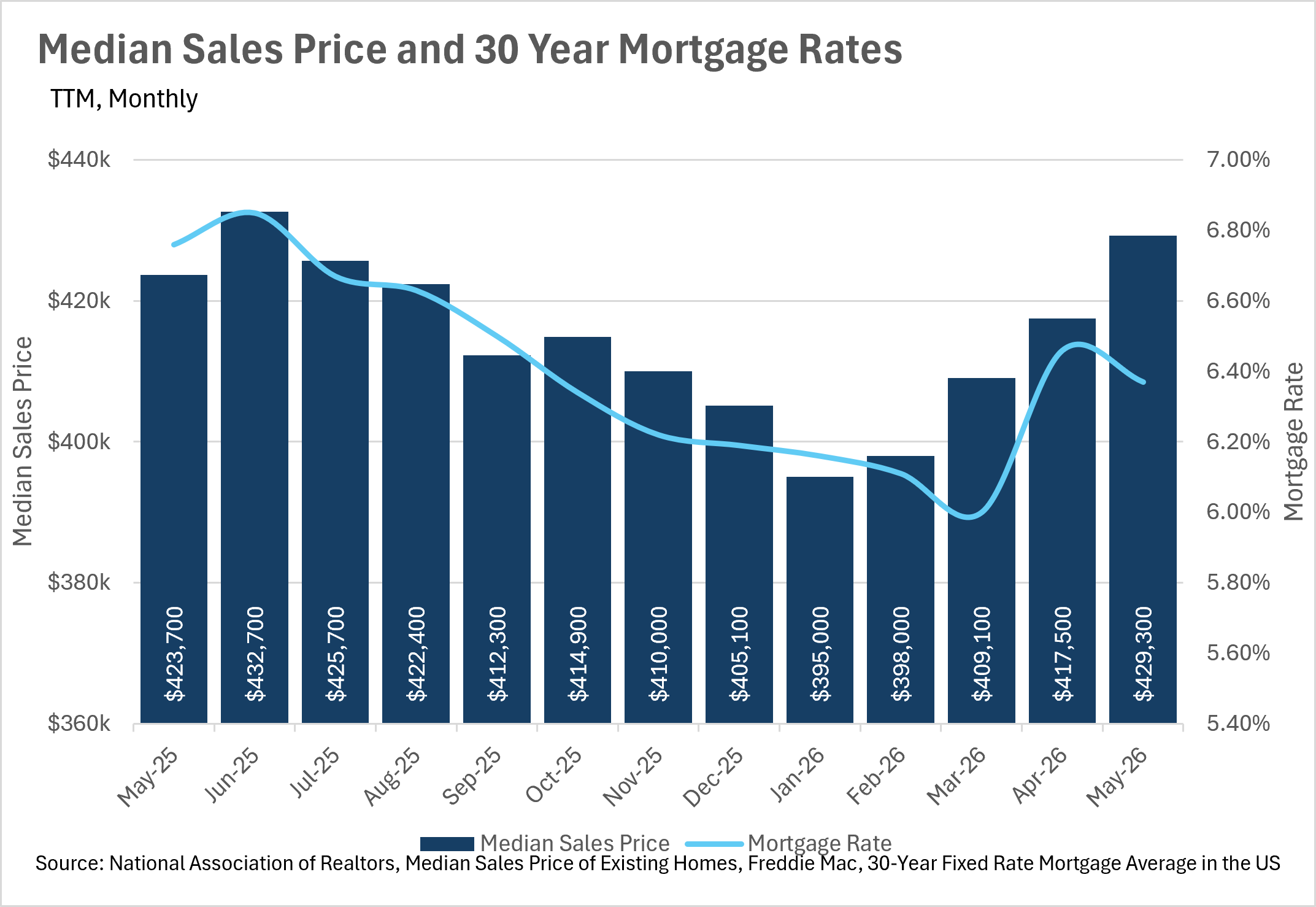
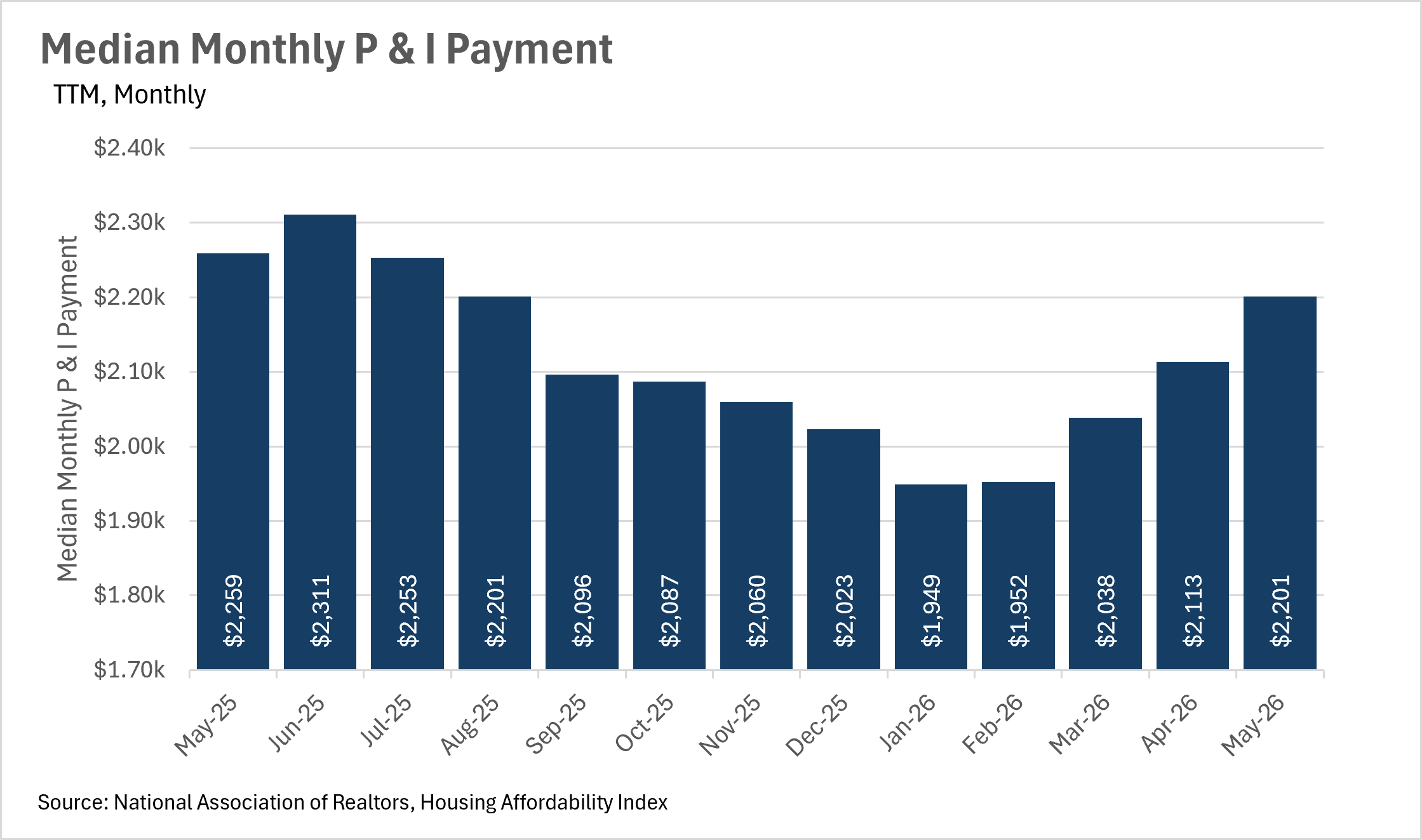
The spring selling season has delivered exactly the kind of price action that sellers were hoping for. The median home sold for $429,300 in May, representing a 2.83% month-over-month increase and a 1.32% year-over-year gain. This marks the fourth consecutive month of month-over-month price increases since the market bottomed out at $395,000 in January, and it's the highest median sale price we've seen since last summer. Helping fuel this rally is the fact that mortgage rates have come back down a bit after their April spike, settling at 6.37% in May, which is 5.77% lower than the 6.76% we were seeing at this time last year. That said, the median monthly P&I payment came in at $2,201, which is only 2.57% lower than the $2,259 the median homeowner was paying a year ago. The affordability gap is narrowing, as rising prices are beginning to eat into the savings that lower rates have provided. It'll be worth keeping a close eye on this dynamic as we move deeper into the summer months.
Inventory is back to last year's levels just in time for the summer rush
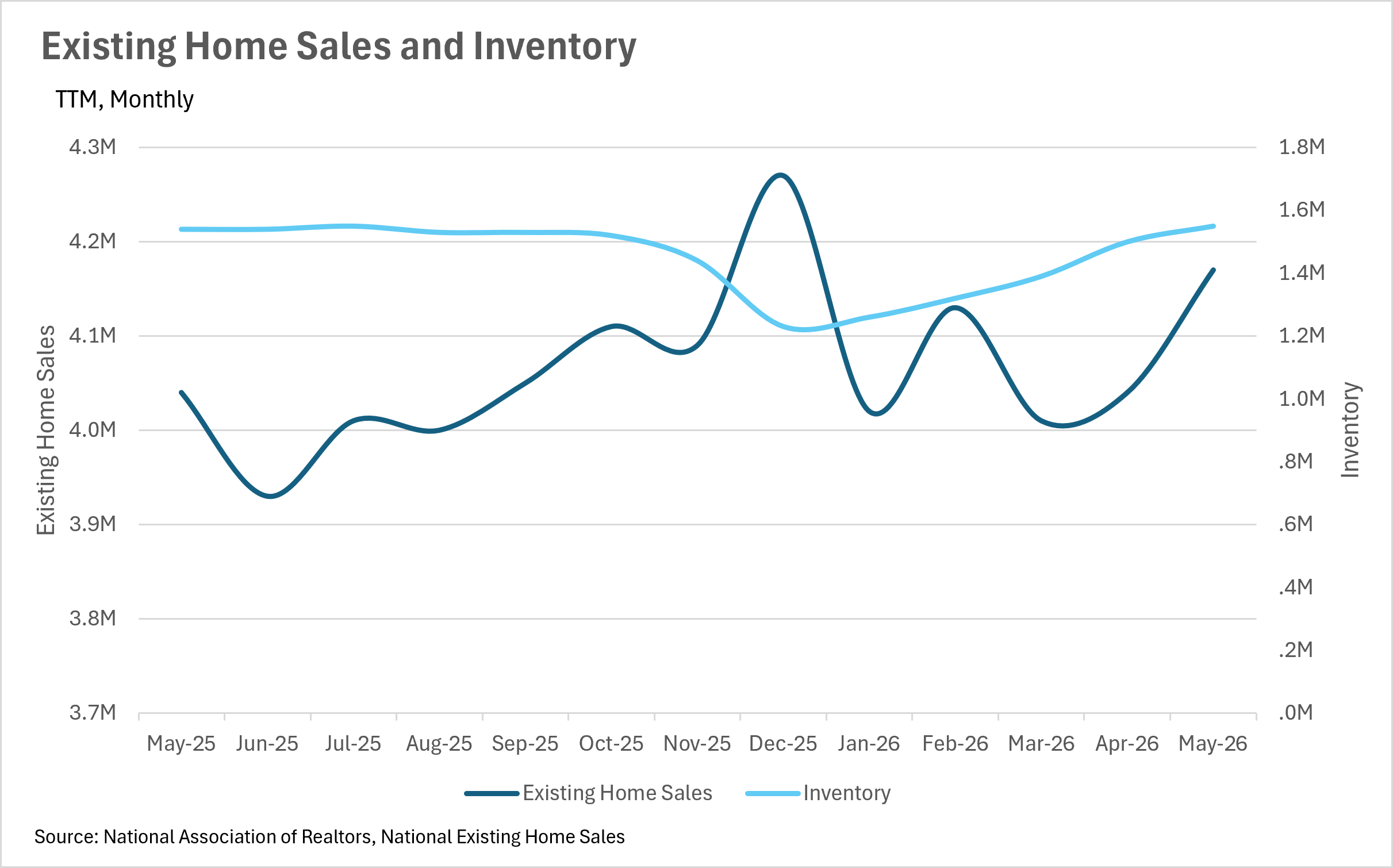
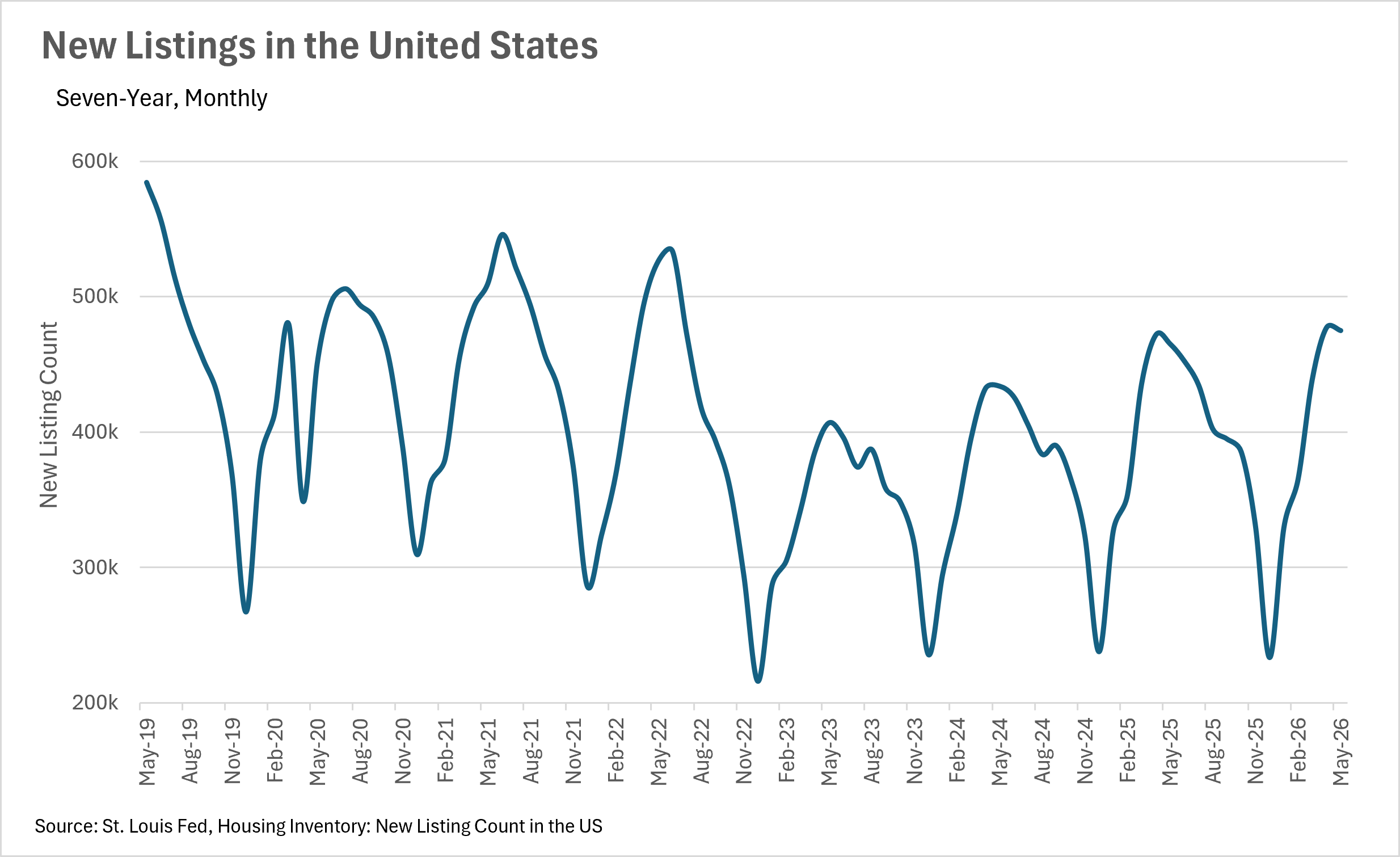
After spending much of the winter and early spring playing catch-up, inventory levels have finally returned to where they were at this time last year. In May, there were 1,550,000 homes available for sale, representing a 0.65% year-over-year increase and a 3.33% month-over-month gain. While the year-over-year increase is modest, it's encouraging to see inventory keeping pace with last year's levels, especially considering how tight supply has been for the past several years. On the new listings front, 474,976 new listings hit the market in May, representing a 2.12% year-over-year increase, though this was a slight 0.45% decline from April's pace. This tells us that sellers are still actively listing their homes, but the initial spring rush may be tapering off just a bit. If inventory continues to build through June and July, buyers heading into the summer could find themselves with the most options they've had in years.
Buyers are back, and they're buying
Perhaps the most encouraging data point this month is the significant uptick in existing home sales. In May, 4,170,000 homes changed hands, representing a 3.22% increase on both a month-over-month and year-over-year basis. This is a meaningful shift from the sluggish sales figures we've been tracking over the past several months, and it suggests that the combination of lower mortgage rates and growing inventory is finally pulling buyers off the sidelines. It's also worth noting that this is the highest existing home sales figure we've seen since December, when the market saw its seasonal year-end push. If this momentum carries through the summer, we could be looking at one of the more active selling seasons we've seen in recent years. Of course, the big wildcard here is mortgage rates. If rates continue to decline, it could add even more fuel to the fire. But if they tick back up, as they did in April, it could pump the brakes on what has been a very promising start to the summer.
The tug-of-war between buyers and sellers continues
When determining whether a market is a buyers' market or a sellers' market, we look to the Months of Supply Inventory (MSI) metric. The state of California has historically averaged around three months of MSI, so any area with at or around three months of MSI is considered a balanced market. Any market that has lower than three months of MSI is considered a seller's market, whereas markets with more than three months of MSI are considered buyers' markets.

Right now, the national market finds itself in an interesting position. Inventory is growing, but existing home sales are growing right along with it, which means the months of supply on the market hasn't shifted dramatically in either direction. The fact that both supply and demand are ticking up simultaneously tells us that we're in a relatively balanced market at the national level. However, the direction of mortgage rates over the next couple of months will likely determine which way the scale tips. If rates continue their downward trajectory, demand could outpace supply, pushing us back toward a seller's market. On the other hand, if rates climb again, inventory could pile up, giving buyers the upper hand. As always, real estate is a highly localized asset, which is why you should check out what's going on in your local market below in the Local Lowdown!

Big Story Data

The Local Lowdown
Quick Take:
  • Median sale prices posted gains in three of four counties, with Sonoma County leading the way at 2.33% year-over-year growth, while Marin County saw a 4.70% decline.
  • Inventory levels remain significantly constrained, with single-family home inventory down 36% and condo inventory down 25.32% on a year-over-year basis.
  • Listings are moving quickly across most of the region, with Marin County single-family homes selling in just 13 days.
Note: You can find the charts/graphs for the Local Lowdown at the end of this section.

Three out of four counties post year-over-year gains
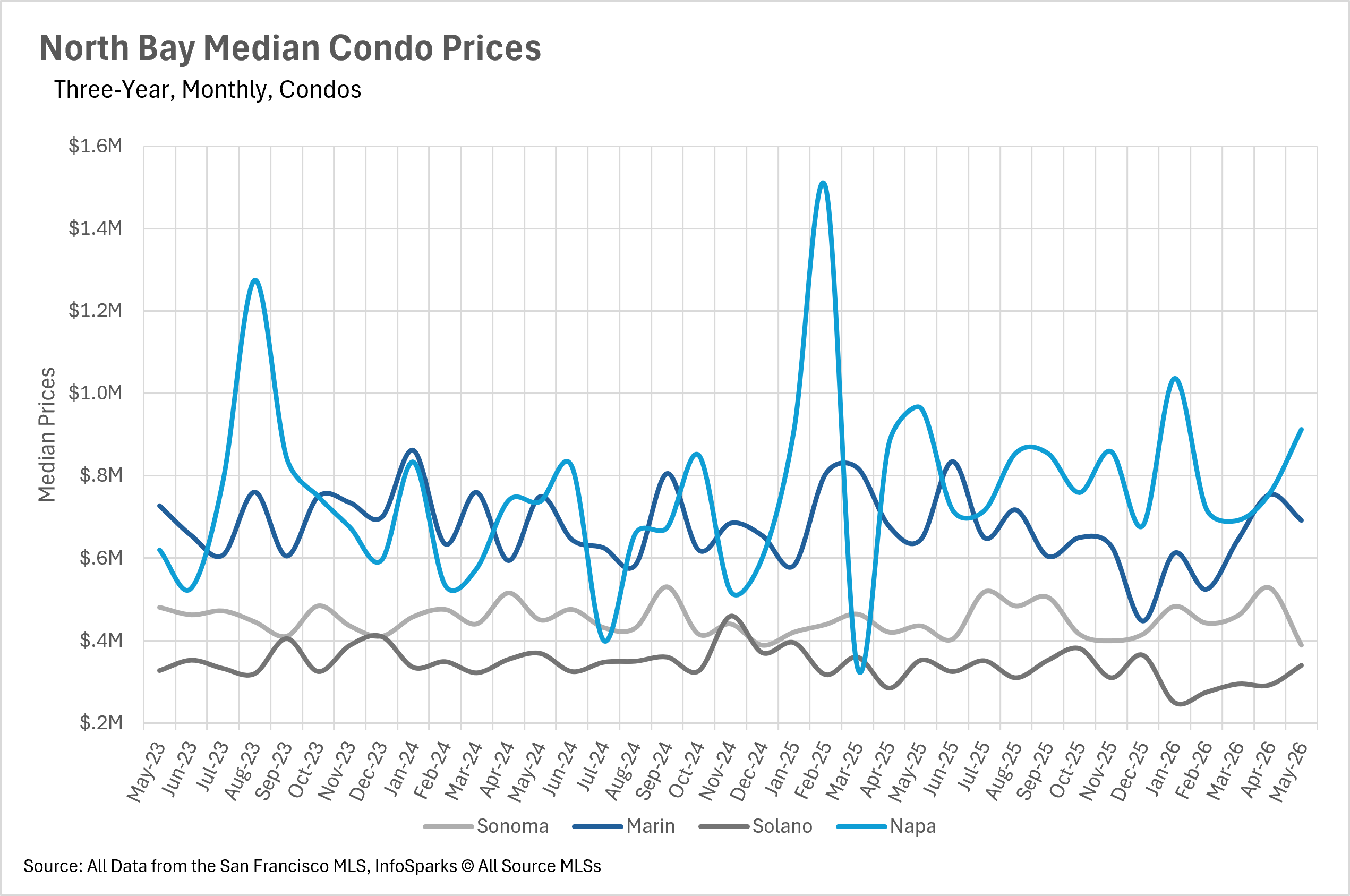
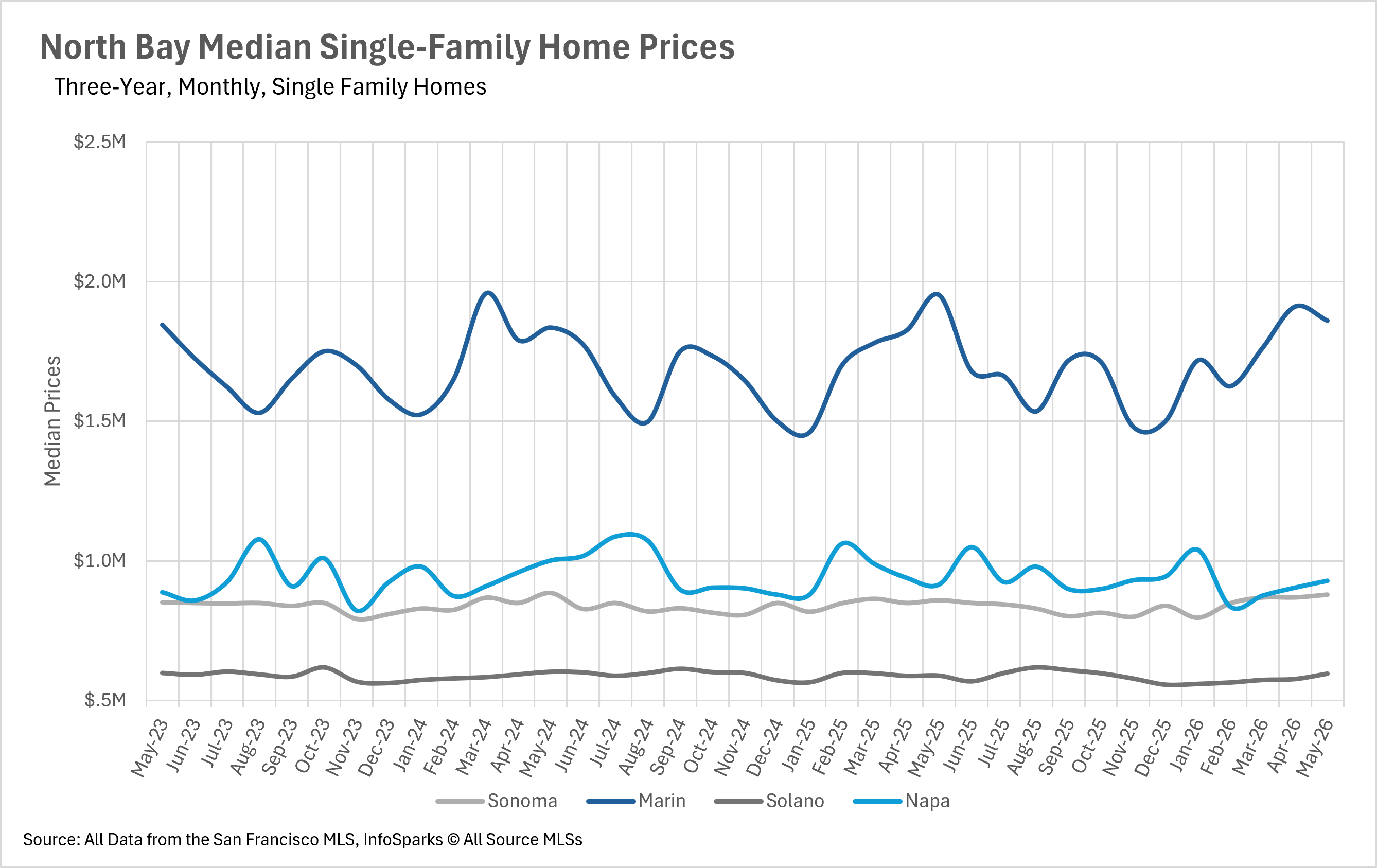
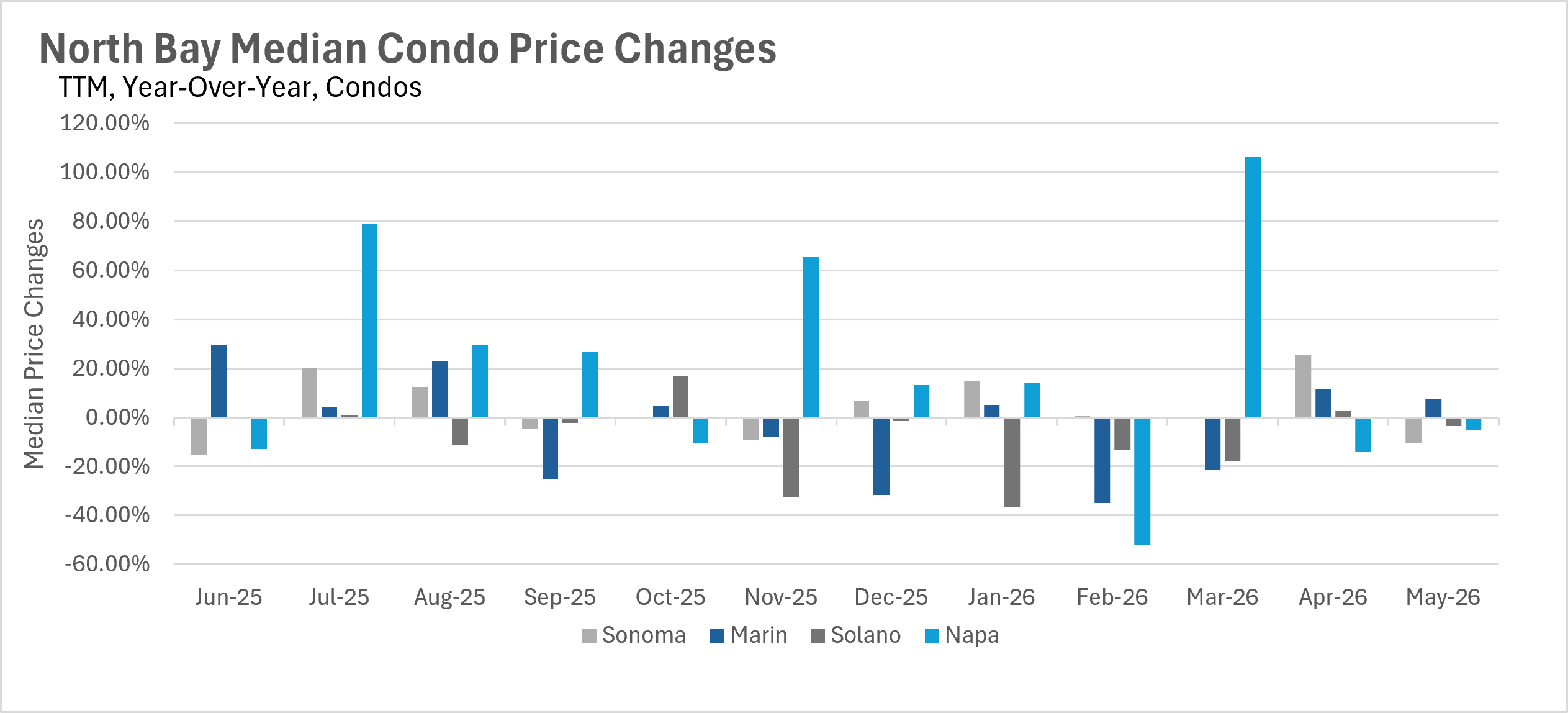
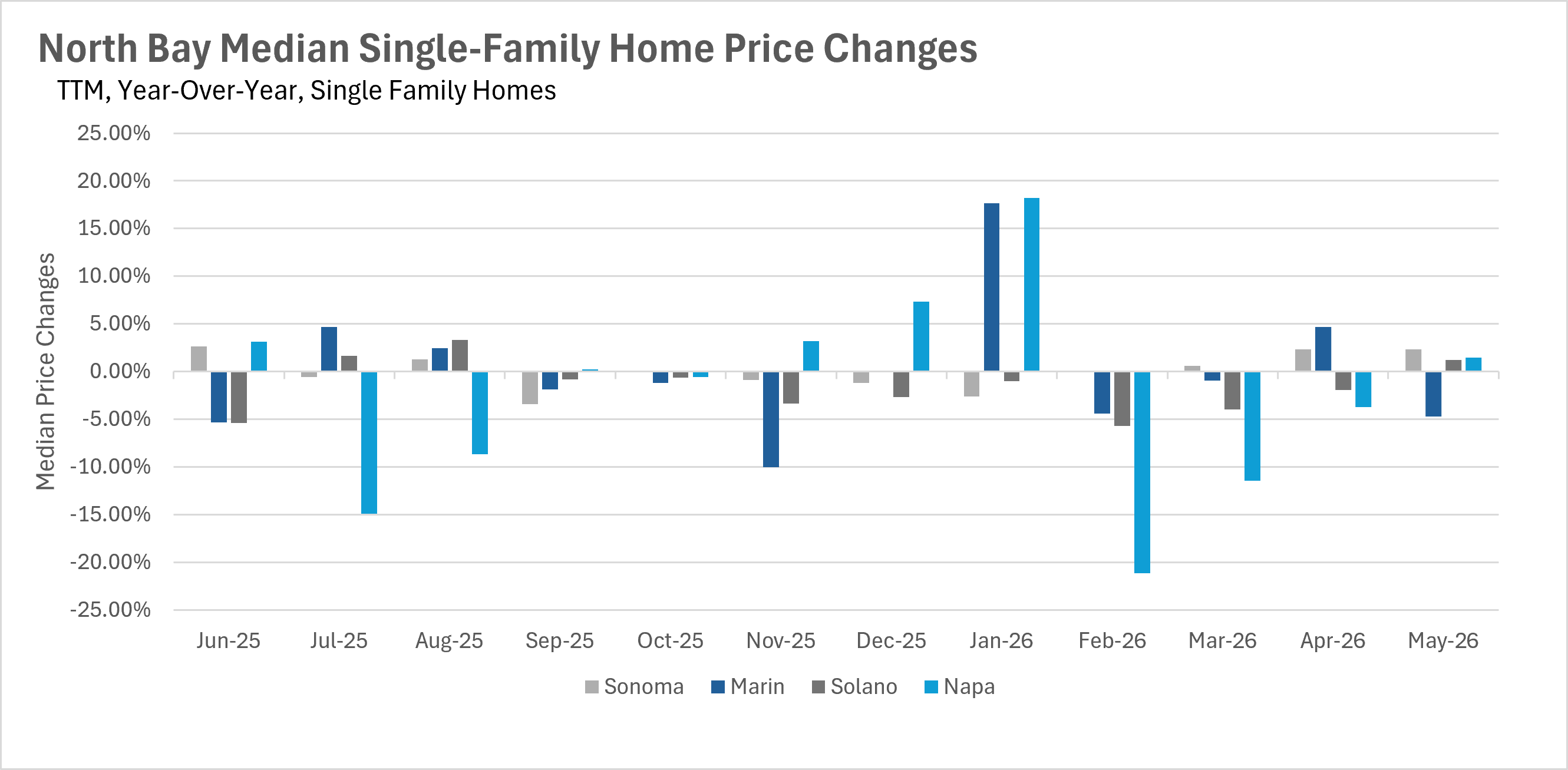
May brought welcome news for homeowners across much of the North Bay, with three of the four counties posting year-over-year price gains in the single-family home market. Sonoma County led the way, with the median single-family home selling for $880,000, a 2.33% increase compared to May 2025. Napa County saw a 1.47% gain to $929,500, and Solano County ticked up 1.19% to $597,475. Marin County was the lone decliner, with the median sale price falling 4.70% year-over-year to $1,860,000. The condo market painted a different picture, with most counties seeing declines. Sonoma County condos dropped 10.73% year-over-year, Napa County fell 5.44%, and Solano County declined 3.55%. Marin County bucked the trend with a 7.29% increase in median condo sale price.

Inventory remains in short supply as summer approaches
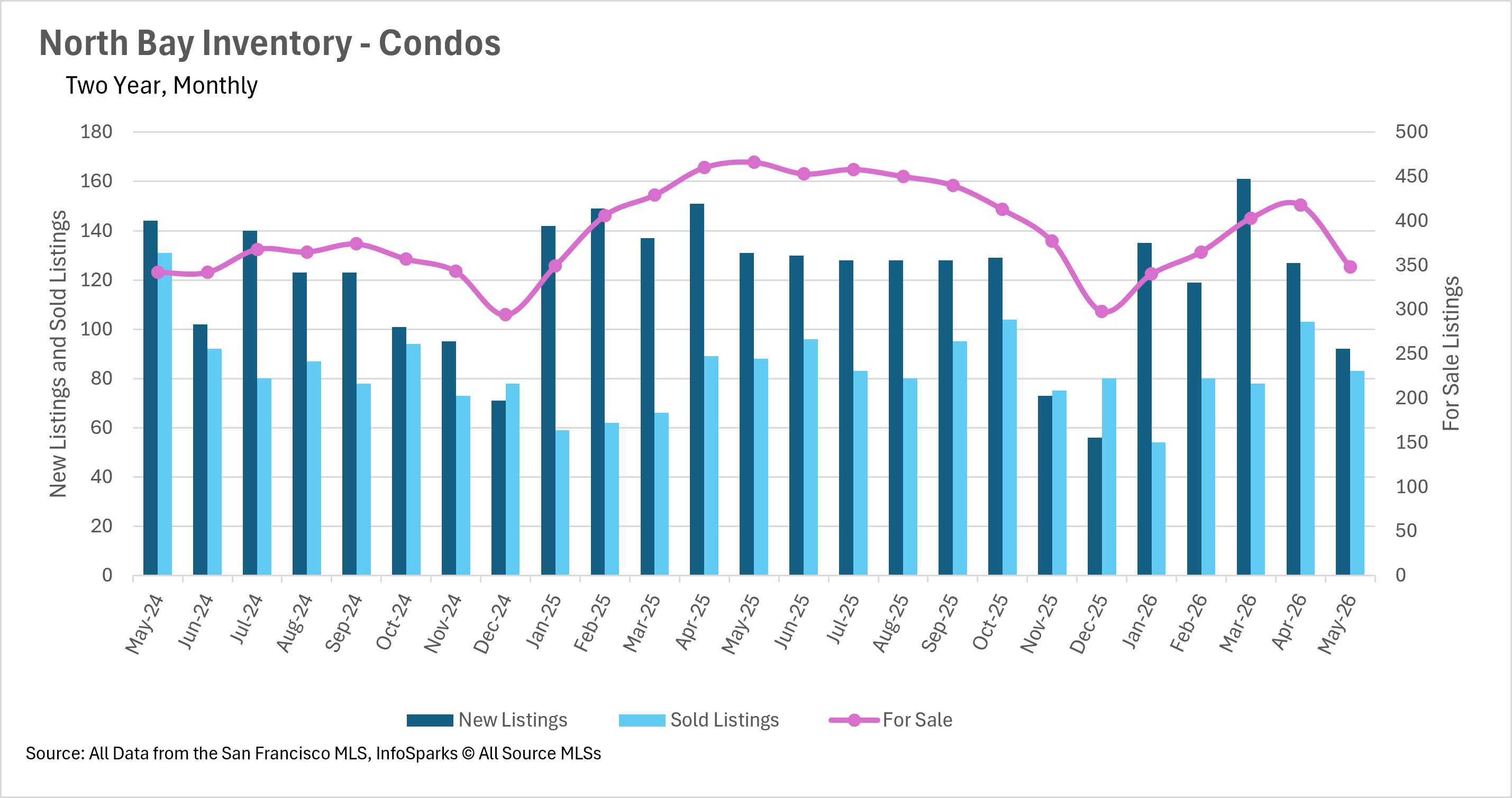
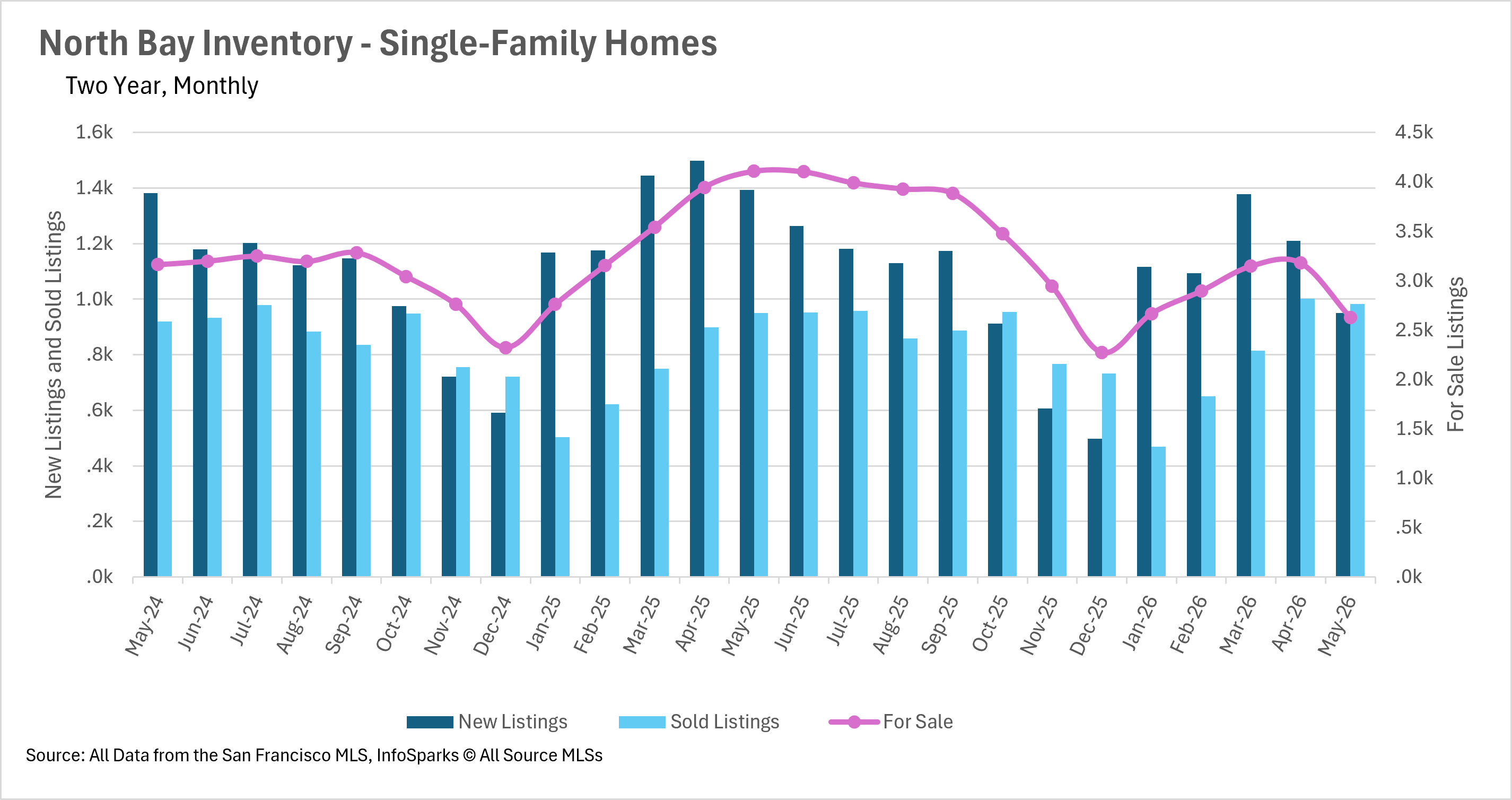
The inventory crunch that has defined the North Bay market over the past year shows no signs of easing. Single-family home inventory now sits at just 2,629 units across the region, down 36% compared to May 2025. The condo market is similarly constrained, with just 348 units available, a 25.32% year-over-year decline. New listings continue to trail last year's pace, down 31.73% for single-family homes and 29.77% for condos. On the demand side, single-family home sales are up 3.37% year-over-year, while condo sales are down 5.68%. This imbalance between supply and demand continues to create competitive conditions for buyers, particularly in the single-family home market.

Marin County homes are selling at lightning speed
May brought some impressive sales velocity across the North Bay, particularly in the single-family home market. Marin County led the way with a median of just 13 days on market, a 23.53% improvement compared to last May. Sonoma County single-family homes also moved faster, selling in 30 days, a 6.25% year-over-year improvement. Solano County was slightly slower at 32 days (up 14.29% year-over-year), while Napa County continued to lag at 44 days (up 29.41%). The condo market showed broad improvement, with Sonoma County condos moving 24.59% faster, Solano County condos 25% faster, and Marin County condos 17.65% faster than last year. The exception was Napa County, where condos are spending 131.43% more time on the market, with a median of 81 days.
Summer heats up with seller's market conditions
When determining whether a market is a buyers' market or a sellers' market, we look to the Months of Supply Inventory (MSI) metric. The state of California has historically averaged around three months of MSI, so any area with at or around three months of MSI is considered a balanced market. Any market that has lower than three months of MSI is considered a seller's market, whereas markets with more than three months of MSI are considered buyers' markets.

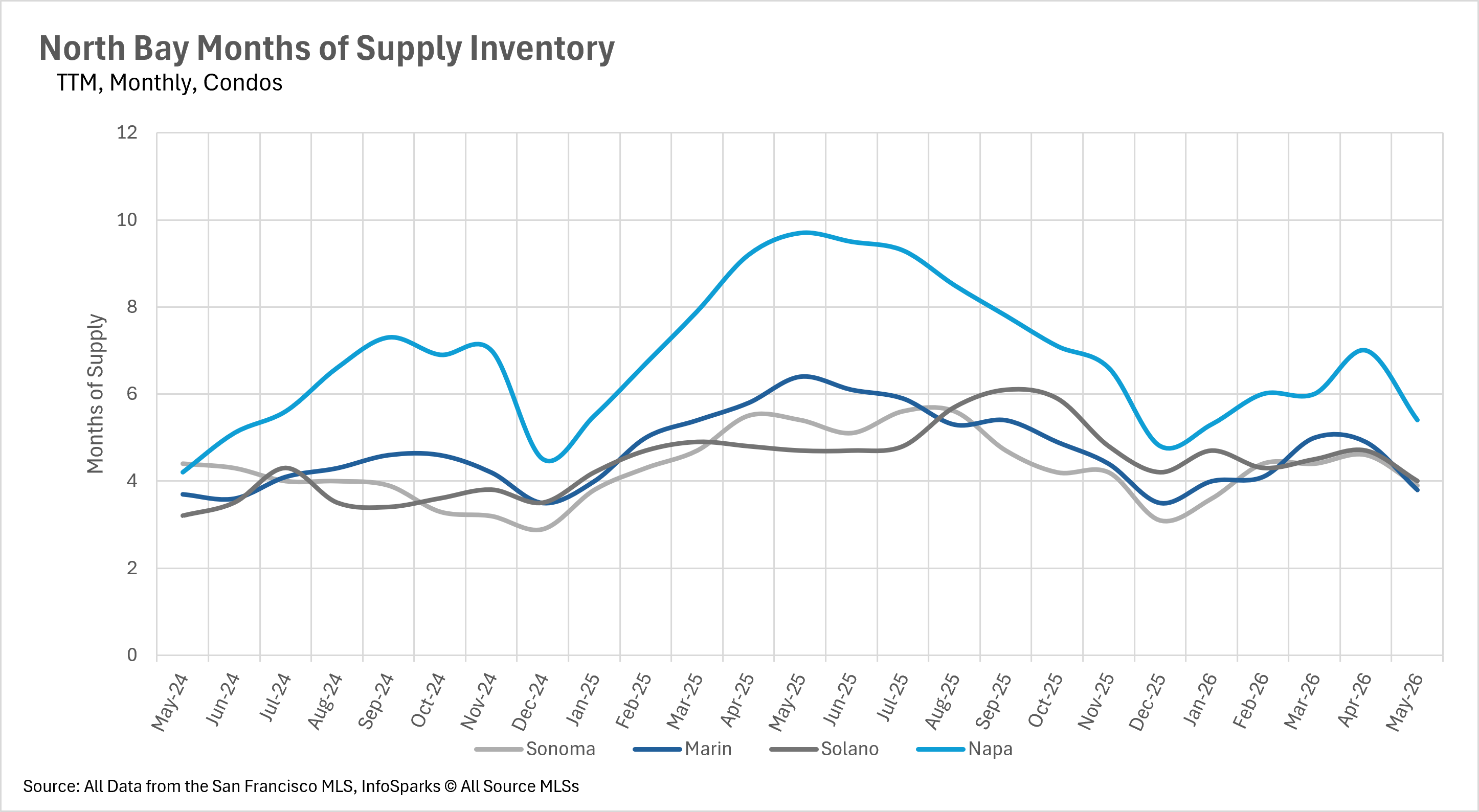
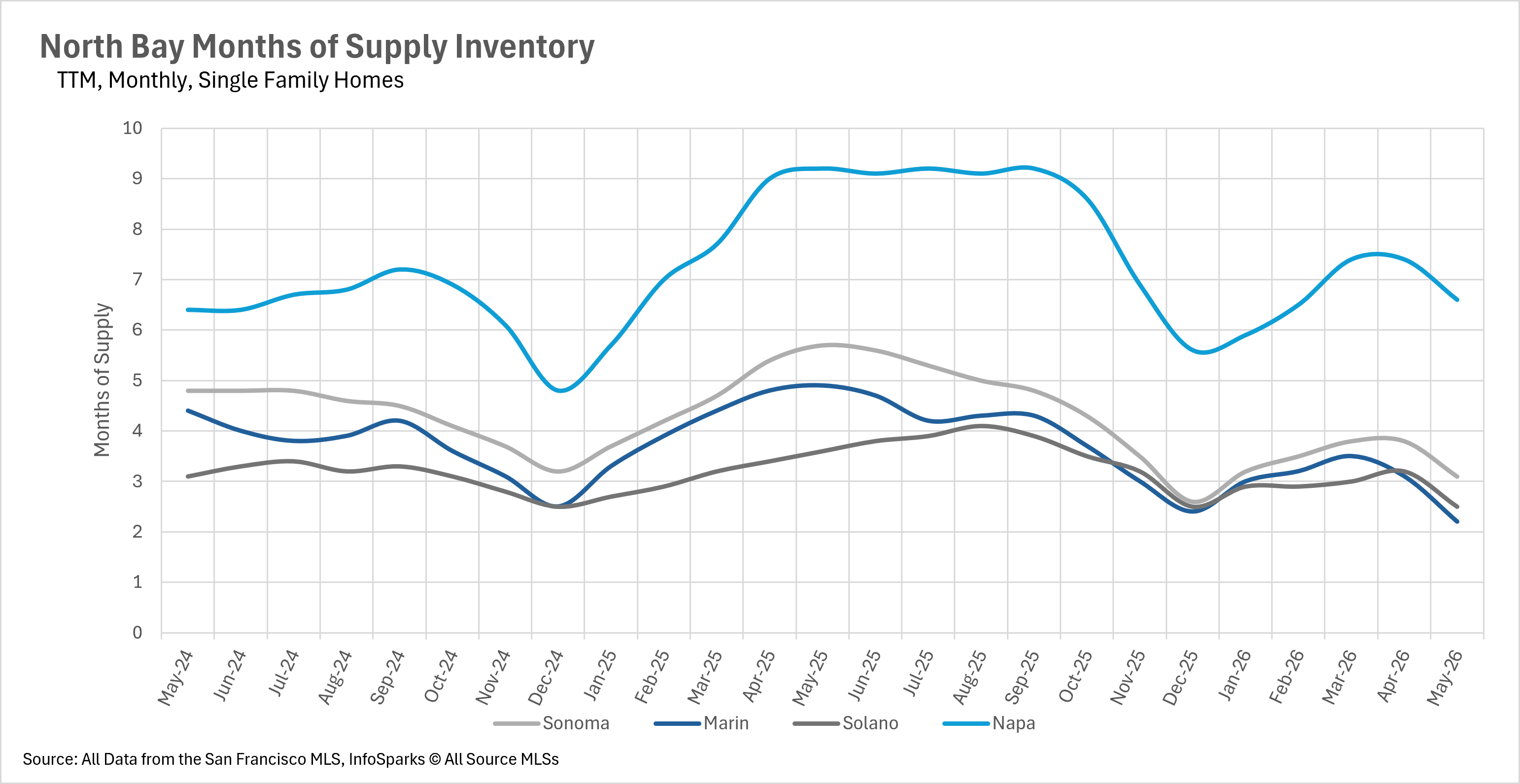
May brought a significant tightening of inventory across the North Bay as we head into the summer selling season. The single-family home market is firmly in seller's territory in three of the four counties. Marin County has just 2.2 months of supply, down a remarkable 55.10% year-over-year. Solano County sits at 2.5 months (down 30.56%), and Sonoma County has 3.1 months of supply (down 45.61%). Even Napa County, which remains a buyer's market at 6.6 months, has tightened by 28.26% compared to last year. The condo market is more balanced, with Marin and Sonoma Counties hovering around 3.8-3.9 months of supply, Solano County at 4 months, and Napa County at 5.4 months. Overall, sellers continue to enjoy favorable conditions, especially in the single-family home market, as we move into the busiest season of the year.

Local Lowdown Data

ActivePipe Message ID: 3892376

Let’s Talk

You’ve got questions and we can’t wait to answer them.